
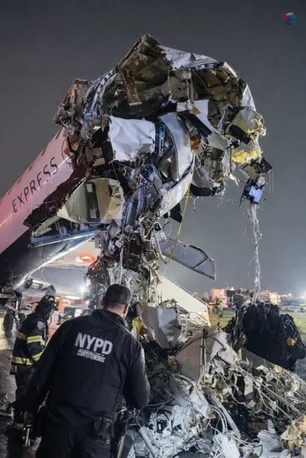
What exactly happened in the Air Canada plane crash at LaGuardia Airport? Why did the Air Canada aircraft collide with a ground vehicle? Who were the victims and what injuries were sustained? What will investigators conclude about safety failures? The Air Canada plane crash at New York’s LaGuardia Airport has rapidly become front‑page news around the world, sparking urgent questions from travelers, aviation experts, and families alike. Images and audio from the runway illustrate a harrowing collision between an Air Canada Express flight and an emergency vehicle during landing — an accident that has claimed lives and stunned communities across borders.
- Air Canada Plane Incident at LaGuardia: Key Context explains the latest key context for readers.
- Readers should check the article update date and linked sources where available.
- Related articles and official references are included to help readers explore more.
This comprehensive report breaks down the incident, background, social media reactions, expert opinions, and what the future may hold for industry safety and those affected by the crash.
What Happened: The Air Canada Plane Crash in Detail
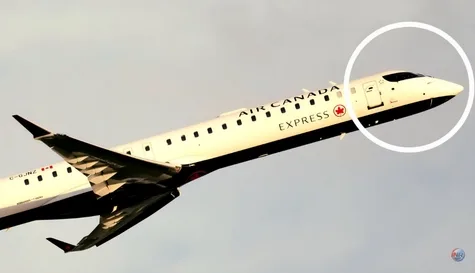
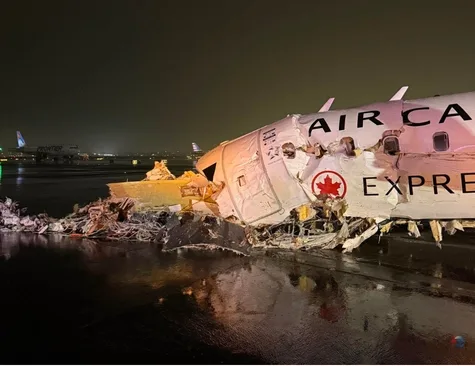
Late on March 22, 2026, Air Canada Express Flight 8646 — a Bombardier CRJ‑900 regional jet carrying 72 passengers and four crew members — landed at LaGuardia Airport (LGA) in Queens, New York. As the aircraft touched down, it collided with a Port Authority fire truck (emergency vehicle) that was crossing the runway as part of a separate response.
According to authorities:
- The pilot and co‑pilot were killed in the crash.
- Several passengers and crew sustained injuries of varying severity.
- Two emergency personnel on the fire truck were wounded and reported in serious condition.
- The collision caused significant damage to the aircraft’s nose and fuselage, halting operations at one of the United States’ busiest airports.
The incident prompted an immediate ground stop at LaGuardia Airport, delaying and cancelling flights while emergency services and investigators responded.
Emergency responders worked through the night to evacuate passengers and secure the scene. Audio released from air traffic control captures the tense final seconds before the collision.
Background: Aviation History and Context of the Air Canada Plane Crash
Although the 2026 Air Canada plane crash is recent, historically Air Canada has experienced incidents in its long decades of service. Past flights like Air Canada Flight 189 (1978) and Air Canada Flight 621 (1970) were deadly accidents in earlier eras of aviation history, underscoring the evolving nature of flight safety and technology.
Flight 8646 was operated by Jazz Aviation on behalf of Air Canada Express, a common practice for regional flights serving busy North American hubs.
Weather conditions earlier in the evening had already caused disruptions at LaGuardia Airport, with rain affecting tarmac and runway operations, potentially complicating the landing sequence.
The collision occurred as the aircraft was landing on Runway 04, and the emergency vehicle was granted clearance to cross — a decision that is now under scrutiny by investigators.
Public & Social Media Reactions: Shock and Mourning After the Air Canada Plane Crash
As news broke across platforms, millions reacted with shock:
Social Media Responses
- On X and Reddit, users shared ATC audio, photos of the damaged aircraft, and heartfelt condolences for the families of victims.
- Aviation communities expressed grief over the loss of the pilots and empathy for injured passengers and emergency personnel.
- Many users debated whether the fire truck should have been cleared to cross the runway while the aircraft was landing, pointing to potential communication or procedural errors.
Public Grief and Support
Hashtags related to pilot safety, aviation incident analysis, and victim support trended, with many amplifying appreciation for emergency crews and sharing personal experiences of flights through LaGuardia.
Although initial details were conflicting, the tragedy has drawn empathy globally, especially from travelers who cite concerns over aviation safety protocols.
Expert Opinions: What Aviation Analysts Are Saying
Aviation Safety Experts
Aviation professionals highlight that runway incursions – when an unauthorized vehicle or person enters an active runway – are among the most dangerous events in air traffic. Analysts emphasize that standard protocols are designed to prevent such incursions through multiple safeguards. Whether these protocols broke down due to human error, miscommunication, or situational stress will be a focus of the official investigation initiated by the National Transportation Safety Board (NTSB) and the Federal Aviation Administration (FAA).
Air Traffic Control Perspectives
Experts note that air traffic control teams often coordinate both ground and tower frequencies, which can strain workflow — particularly during weather disruptions or heavy traffic. They stress that any failure in this coordination can have grave consequences for safety.
Aviation Law Analysts
Legal analysts indicate that the collision will likely involve a thorough review of FAA clearance protocols, ground vehicle authorization procedures, and whether standard separation between landing aircraft and ground vehicles was correctly maintained.
Impact of the Air Canada Plane Crash
Human Toll
The deaths of the pilot and co‑pilot — members of the flight crew — have deeply affected the aviation community, families, and colleagues. There are also several reported injuries among passengers and emergency responders, underscoring the wide human impact beyond the immediate crash site.
Airport Operations
LaGuardia Airport closed all operations immediately following the crash and implemented a ground stop that lasted into the following day. This has led to widespread cancellations, delays, and significant logistical challenges for travelers in and out of New York City.
Traveler Confidence and Airline Reputation
While aviation remains statistically one of the safest forms of travel, any crash involving fatalities can affect public perception of airline safety and runway protocol reliability.
Aviation Policy Discussion
The incident is already prompting discussions among policy makers and airline safety boards about how to prevent runway incursions and improve coordination between ground vehicles and aircraft operations — especially under stressful conditions.
What Happens Next: Investigations and Future Implications
Official Investigations
Both the NTSB and the FAA have launched formal investigations into the crash to determine the precise sequence of events, communications, and decisions that led to the collision.
These investigations typically involve:
- Analysis of air traffic control recordings
- Review of runway clearance logs
- Interviews with ground crew and airport personnel
- Examination of weather data and timing sequences
Findings will likely be made public in interim and final reports that could take months.
Safety Recommendations
Based on preliminary discussions, experts expect the eventual investigation to recommend:
- Enhanced ATC communication protocols
- Stricter runway vehicle clearance systems
- Upgraded radar or sensor alerts to prevent runway incursions
- Additional training for controllers and emergency response teams
Support for Victims and Families
Air Canada, alongside U.S. authorities, will likely provide support programs for passengers, crew families, and injured responders — including financial assistance, counseling, and travel accommodations for relatives.
FAQ Section
1. What caused the Air Canada plane crash at LaGuardia Airport?
The Air Canada plane crash occurred when Flight 8646 collided with a ground emergency fire truck during landing, leading to fatalities and injuries. Official investigations are ongoing.
2. Were there any fatalities in the Air Canada plane crash?
Yes, the pilot and co‑pilot were confirmed dead following the crash. Several others were injured.
3. Is the Air Canada plane crash still affecting flights?
Yes, the crash caused a temporary closure and ground stop at LaGuardia Airport, affecting schedules and causing cancellations.
4. What kind of aircraft was involved in the Air Canada plane crash?
The plane was a Bombardier CRJ‑900 operated by Jazz Aviation on behalf of Air Canada Express.
5. What will the investigation into the Air Canada plane crash examine?
Investigators will review air traffic control records, runway vehicle permissions, weather conditions, and safety protocols to determine the cause.
Conclusion: Summarizing the Air Canada Plane Crash and What Comes Next
The Air Canada plane crash at LaGuardia Airport is a tragic reminder of how even in an age of advanced aviation safety, disasters can occur with devastating consequences. With the loss of two crew members, multiple injuries, and major disruptions at one of the busiest airports, the accident has sent shockwaves through the aviation community and general public.
As investigations by the FAA and NTSB continue, the aviation industry will be watching closely for lessons on runway safety, emergency vehicle coordination, and air traffic control procedures. For passengers and the broader traveling public, this crash highlights both the rare but real risks of flight and the importance of stringent safety checks at every level.
Officials have promised full transparency and rigorous analysis to prevent future Air Canada plane crash incidents — and the world now waits for the findings that could shape future aviation policies and protocols.
Indian News Reporter: Your source for smart, speedy updates!
Frequently Asked Questions
What is this article about?
This article provides a concise update and background information for readers.
Where should readers verify important details?
Readers should verify important dates, prices, results and official announcements from the relevant official source.
